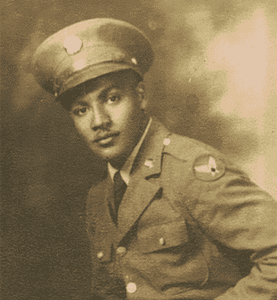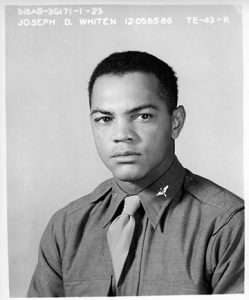

997 cadets received their pilot wings after training at Tuskegee Army Airfield. Of this number about 30 were USAAF Field Artillery Liaison Pilots who flew light observation airplanes for the 92nd Infantry Division (Buffalo Soldiers), which saw action assigned to the American 5th Army. This segregated unit was the only African American infantry division to see combat in Europe during World War II; its members served in the Italian Campaign from 1944 to the war’s end.
Liaison pilots flew little, undefended airplanes (unless you count the pilot’s own sidearm!), often over enemy territory. Most of the airplanes were covered in fabric, not metal (remember that the enemy was firing at them…) and all had engines with less than 175 hp. Modern minivans typically have more horsepower!
The airplanes were so small and slow that they had unique names like “grasshoppers,” “puddle jumpers,” “putt-putts” and, my favorite, “Maytags” because the birds had small engines like washing machines.
The liaison pilots’ job was to fly at low altitude and snoop on troop movements and gather other important information about the enemy. They also did photo and military reconnaissance, ferried spies into remote sites, shuttled people – including the injured – and deliver classified information to the front. They trained in unusual flying maneuvers such as take offs and landings on unimproved roads, one-wheel take offs and landings, and high power descents. Without putting too fine a point on it, the liaison pilots truly did fly by the seat of their pants.
The MinnesotaWing of the CAF has a Stinson L-5 Sentinel, one of the planes that liaison pilots flew. This picture of it will give you a feel for how small and vulnerable these airplanes really were.

All WWII military personnel were brave, but the liaison pilots must have had a special type of bravado to get into their tiny cloth-covered airplanes and fly missions low and slow.
The CAF Red Tail Squadron is a volunteer-driven 501c3 non-profit organization that operates under the auspices of the Commemorative Air Force. For more information, please visit redtail.org.