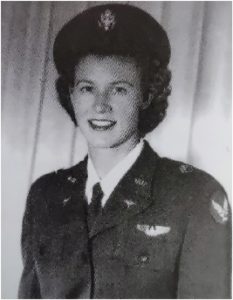

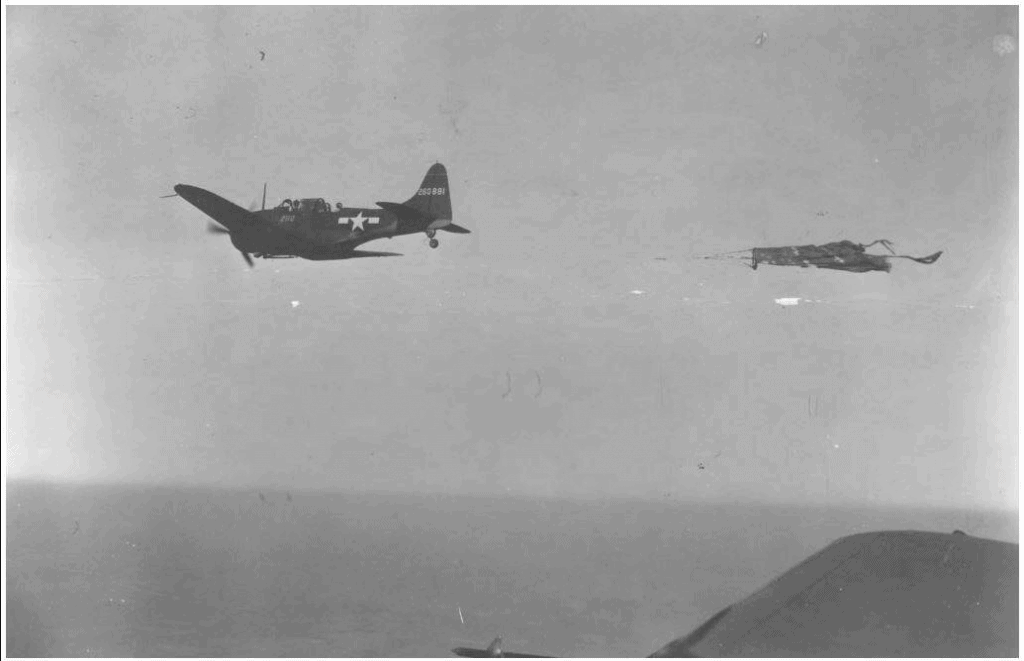
Another important mission of the WASP was serving on tow target squadrons. The pilots, including Laurine Nielson, Viola Thompson, Mary Clifford, and Lydia Linder, would fly planes with canvas targets attached to the back for male students to practice gunnery for combat, firing ammunition at the targets.
In the training Division, WASP would tow targets behind their planes. From the ground, men shot at the planes for combat training. They would sometimes miss, forcing the women to make emergency landings and come down with holes in their planes. There were more than 900 women in the Training Division.
WASP even instructed male pilots in ground school and flight training. Jane Shirley taught male officers at Foster Field in Victoria, Texas. Ethel Meyer Finley instructed male pilots in flying at Shaw Army Air Base in South Carolina, and she recalls that most male pilots and military officers on the bases had positive attitudes toward the WASP and worked well together. She and other WASP did experience gender discrimination, but the WASP continued to complete their missions and serve their country despite these obstacles and hardship.
WASP missions also included flight testing all types of military aircraft, such as four-engine bombers, an extremely important and dangerous task. In June 1944, the same month as the D-Day Invasion, WASP Dora Dougherty and Dorothea Johnson Moorman flight tested the Boeing B-29 bomber Superfortress “Ladybird” for Colonel Paul Tibbets. Male Airforce pilots refused to flight test the bomber at an AAB at Clovis, New Mexico, thinking the mission too dangerous. Colonel Tibbets called for two WASP pilots to train on the B-29 then complete flight tests of the Superfortress “Ladybird.” Dougherty and Moorman successfully piloted the bomber, even while experiencing an engine fire during flight. Colonel Tibbets recalled that, “They did the job. And I don’t know how we could have gotten people to fly B-29 airplanes without them.” He later served on the Manhattan Project and piloted the B-29 bomber Superfortress “Enola Gay” that dropped the first atomic bomb over Hiroshima in August 1945 at the end of World War II.
Sources:
MegaVision.net
WomensHistory.org